
Planning
How to reduce food waste with a pantry-aware meal routine
A practical weekly rhythm that uses what you already own first, then fills only what is missing.
1/16/2026 · 6 min read · Pantri Team

The average household throws away roughly a third of the food it buys. That's not primarily a willpower problem or a lack of good intentions — it's a planning problem. The meal plan and the pantry aren't connected, so food gets bought without a place to go, then forgotten, then thrown away.
Getting those two things in sync is the most direct path to reducing waste. It's also, conveniently, what makes cooking easier and grocery bills lower.
Why disconnected planning produces waste
Here's the cycle most households are stuck in.
You decide you want to make a new recipe this week. You look up the ingredients, add them to a list, and buy them. Some of those ingredients overlap with what you already have — but you don't know that, because you didn't check before you went to the store. Some of the new ingredients only get used partially and sit in the fridge until they don't.
Meanwhile, the produce you bought two weeks ago is getting close to the edge. You know it's there, but nothing you planned this week uses it. It gets pushed out by newer purchases. Eventually it goes.
The disconnection is between what you're planning to cook and what you already own. Fix that, and most waste goes away on its own.
The use-first principle
The most effective anti-waste habit is simple: before deciding what to cook, look at what needs to be used.
In Pantri, this takes the form of a use-up signal — ingredients flagged as likely to need using soon based on when they were added and their typical shelf life. When you're generating recipes or planning your week, putting those ingredients at the center of your meals is the most direct way to keep them from going to waste.
This isn't complicated, but it requires the pantry to be accurate enough to know what's there in the first place. A pantry you've kept current — through receipt scanning and regular updates — gives you a use-first view that actually reflects your kitchen. An estimated mental model doesn't.
Building a weekly rhythm that works
A pantry-aware meal routine doesn't require a lot of time. What it requires is a consistent sequence.
Start with inventory review, not recipe browsing. Before you look at recipes, look at your pantry. What's flagged as use-up priority? What proteins need using? What produce is coming up on its window? Let those answers shape the first two or three meals of the week.
Plan the week around those anchor meals. Once you know what needs using, plan meals that feature those ingredients. If you have chicken thighs that need using and a head of broccoli that's a few days old, this week includes at least one meal that features both. The AI generation in Pantri can surface options specifically around those use-up items.
Let the shopping list fill the gaps. Once meals are planned, Pantri generates a shopping list of only what's missing — the ingredients you planned that aren't in your pantry. Not a full grocery list, not a general "we're running low" list, but a specific gap-fill. This prevents buying things you already have.
Close the loop after cooking. When you cook a meal in Cook Mode, Pantri can update your pantry automatically to reflect what you used. A few seconds of input at the end of cooking keeps the inventory accurate for next week. Without this step, old items linger in your pantry view and create phantom availability.
What this does to your grocery bill
The financial impact of pantry-aware planning is real and direct.
When you stop buying duplicates — items you already have — every shopping trip gets slightly more efficient. For most households, duplicates happen not because of carelessness but because nobody checked before they left. Knowing what's already in the kitchen before you shop means you're only filling genuine gaps.
When you stop throwing away unused food, you stop paying for food you didn't eat. That produce that went in the bin at the end of the week cost real money. Orienting your meal plans around what needs using captures value you already spent.
When your shopping list is derived from actual meal plans rather than general approximations, you also stop the "just in case" shopping that inflates every trip. You buy what you need for what you're making, not a rough estimate of what you might want.
The combination — fewer duplicates, less waste, more targeted shopping — typically shows up in grocery bills within a month of consistent use. The savings aren't dramatic on any single trip, but they're consistent.
What a connected pantry actually means
The deeper point is that a pantry you trust changes how you interact with your kitchen.
When you know what's there, you make better decisions. You don't over-shop because you're not sure what you have. You don't under-cook because you didn't realize you had the ingredients. You don't throw away food because you forgot it existed.
A pantry-aware routine turns your inventory into an asset you're actively working with rather than a mystery you're estimating around. The weekly rhythm — review, plan, shop the gaps, cook, update — is how that asset stays current and useful.
Food waste is mostly a information problem. When you know what you have, what needs using, and what you're actually going to cook, the waste almost takes care of itself.
Related posts
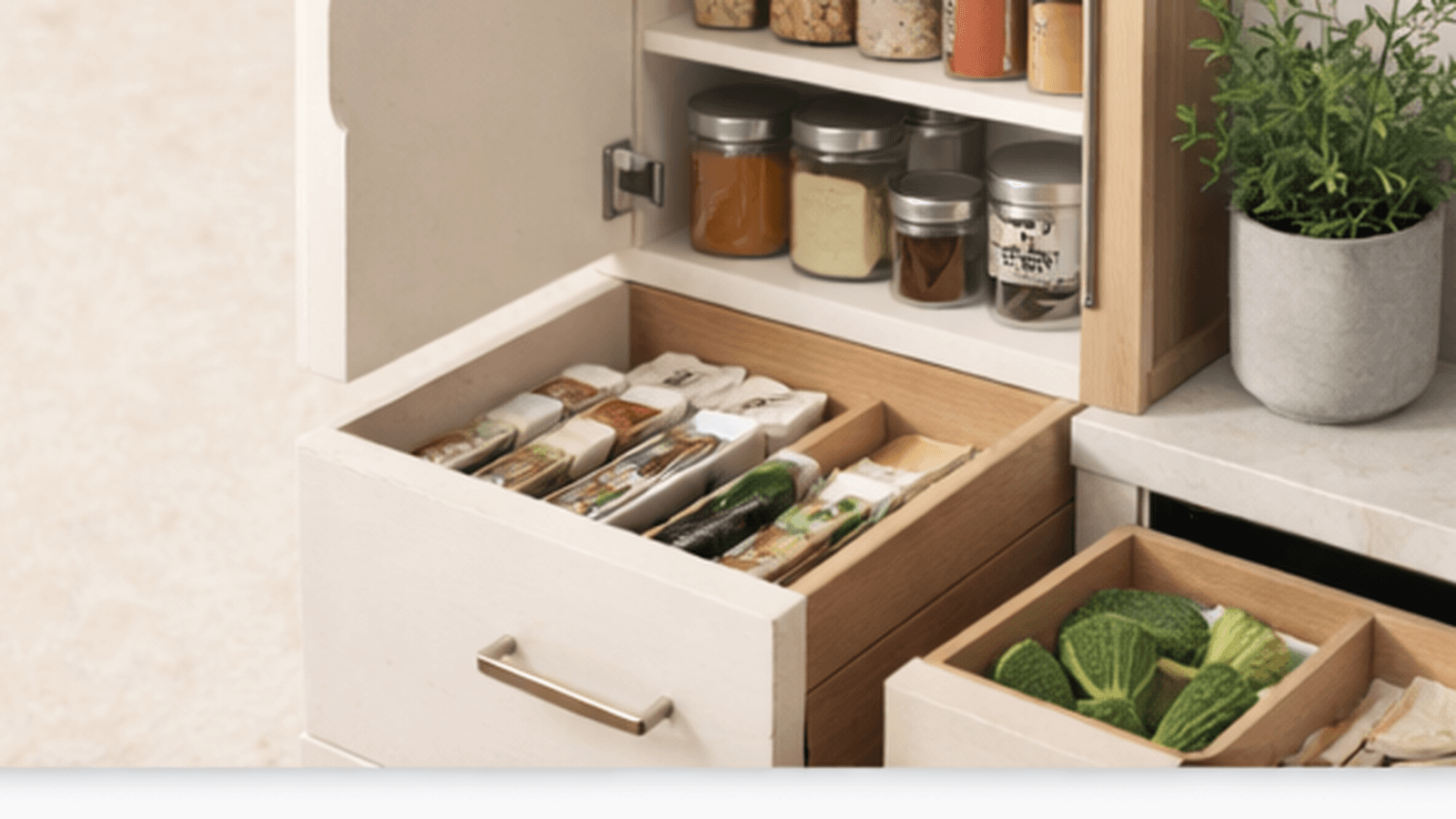
Organization
Kitchen organization that makes planning faster
Set up your pantry zones and labels so inventory stays accurate with minimal effort.
2/9/2026 · 5 min read

Households
Meal planning for couples without duplicate shopping
A lightweight shared flow that prevents overlap and keeps both schedules aligned.
2/2/2026 · 6 min read